It was 50 years ago today. Well, not today exactly but a few months back it was 50 years since I moved to San Francisco. I arrived two weeks too late for the Monterey Pop Festival but there turned out to be enough sex, drugs and rock and roll to come. In fact there was more promise and let-down in three years than I could handle.
Those times were supposed to be commemorated in the DeYoung Museum’s retrospective show this past summer called “The Summer of Love Experience: Art, Fashion and Rock & Roll.” There were cute mock street signs out front comparing now to then in a Haight Street crosses Ashbury Avenue kind of way: free love/marriage equality; hippie/hipster; whole earth catalogue/world wide web. But the show itself captured none of the spirit of those free-wheeling, gritty times. Sterile rooms held disembodied costumes and so many rock posters crammed together that you could hardly zero in on them. Simulated light shows were irritating maybe because it was 10 a.m. and not a crowded concert hall but an empty white box devoid of soul. It didn’t work to try and encapsulate the original carnival drama in the linear grids of this house of the elite, of which DeDe Wilsey is a not so glowing example. (see Oh the Glory of it All by Sean Wilsey) The only real reminder of those earlier and ultimately disappointing days of “love” came in the film clips of bands from the era, playing their inspiring music on a loop in a separate room. Back in the car, ready to leave, we find that parking costs $20.
San Francisco, 1967
It’s a summer weekend in the magical city, the sky bright and air cool as my roommate Charlene and I join the kaleidoscopic throng along Haight Street. We are forced to stop behind a crowd that has gathered around a Byronesque guy in a purple satin pirate shirt who has launched into an impromptu dance, his long dark hair swaying in the sun.
Like a river flowing around a rock, the crowd shifts, carrying us past our entertainer though in a few more steps I halt again as a disembodied voice pleads, “Spare change?” I follow the tinny sound down and see a waif with glazed eyes and matted hair squatting with her back against the wall of a paraphernalia shop. The sidewalk is sticky from God knows what; drinks spilled, urine perhaps, the requisite gum wads. The patchouli incense burning at this girls’ side makes me cough.
A high-pitched whistle rises above the drone of people and vehicles to pierce the air. I look up to see a cop motioning people back onto the sidewalk while another policeman stands in the middle of the Ashbury intersection directing the vans, tourist buses and low slung sedans that creep along as if in a parade. Stern but patient, they keep one eye on the hippies and voyeurs and the other on the Hell’s Angels sitting astride their motorcycles parked at the curb, acting as if they are the real authorities.
My tall, red-headed roommate’s eyebrows raise and she looks at me as if to say, “This is crazy.” I nod, though the truth is I am not freaked out. What’s in front of me may be more colorful and in-your-face, but I grew up with some bizarre stuff. The secretive, WASP-ish scenes of my childhood included events you weren’t supposed to talk about, things that you had to pretend didn’t happen, like my mother getting hauled off to a mental institution in the middle of the night, my father touching my sister’s breast and me being shunted off to an unwed mother’s home and then, at 19, giving up my new-born son for adoption.
That’s why I am here, my plans for college thwarted, my course veering into the unknown as I embark on an Evangeline trek to get away from all of that. “Start over,” is what the social workers at the home advised. “Put this behind you and get on with your life,” they said dispassionately, as if that were possible. I looked straight through them, dismissing them as aliens who knew nothing of what I’d just been through.
Back on Haight Street, a skinny young woman holding a naked two year old bumps into me. “Sorry,” I apologize though she is the one who didn’t pay attention. She looks at me blankly while I stare at the child, its forehead streaked with dirt, noting as I do that mine isn’t as old as this one but I hope he is in better hands. But that is over now and I am gone, with a chance for a new life now, in an exciting city, at a pivotal time. Here I can find the harmony and happiness missing at home. Here, I can become who I was meant to be, have the sophisticated life I’ve dreamt of and change the scenario from one in which my family couldn’t hold me; leading to me not being able to hold my son, to one in which I am embraced by a place more kindred in spirit.
I believed it was possible because of the messages in “California Dreamin’ and Scott McKenzie’s siren line, “If you’re going to San Francisco, be sure to wear flowers in your hair.” In the back of my mind, too, was my mother’s repeated lament about having to leave sunny Orange County after the war when my father decided they should move north. I don’t know if moving back to California would have kept her from going over the edge but I hoped it would save me.
Charlene and I had spent a year at a retail and merchandising school and, on my suggestion, were now leaving Washington. Standing in my parent’s driveway, we watched my father bring out the last heavy box and scoot it onto the back seat of her old Ford Fairlane. As he hurried back inside I turned to my mother to say goodbye. I was about to give her a hug when her large dark eyes turned into teary pools you could drown in. Already removed, I refused to get sucked into her world but a wisp of a wonder caught me. Did she lament the loss of me, her first born; the loss of my first born, her first grandchild or was she jealous that I was the one moving south, eschewing her life of babies and bondage?
“It’s ok,” I attempted to soothe her in our usual reversal of roles, I the young, untrained counselor, desperate to heal this woman with her burdened, restricted life. But I wasn’t going to care-take anymore. No more efforts to win back the sweet cooing mother I lost before the age of two. I was escaping, to find satisfaction and understanding elsewhere, my determination desperate, my belief in benign outcomes naive.
Through the window I saw my father sitting at the desk in his office. A French/Irish mix of red hair and freckles, he had a pronounced nose and close-set, dancing blue eyes that made him look like General George Custer which I knew because of a picture I’d seen in a history book at school. “He’s not coming back out?” My mother shrugged. This short, proud and supposedly tough ex-Marine who’d survived Guadalcanal hadn’t gone to his mother’s funeral either. I went inside and gave him a hug but he remained seated, saying nothing. As Charlene and I drove away I looked back but his head was still down in his paperwork. Was it that I would no longer be there to remind him of his trim, fresh-faced wife in earlier days? Or did he sense that I was never coming back?
As Charlene and I drove south I breathed free as if breaking out of chains; no more to suffer the confusing whiplash from being used by them then ignored; no more the shallow contact being passed off as real connection. I was done caring about their problems and would now focus on what I needed.
Entering the city via the Golden Gate Bridge, I was thrilled to see the white-washed metropolis in front of us. Driving into the heart of the fairytale scene, I fell in love with the colorful little neighborhoods, old world architecture, cable cars and water vistas at every hilly turn. The place was more European than American, making me realize that I was too. Not just a distraction from my white-bread past, this was where I belonged.
But the first night here Charlene and I stayed with a friend of hers on the southern edge of Pacific Heights, a friend who would not let us park in her garage. The next morning we awoke to find the car broken into and all of our things stolen. They took the tiny TV I’d won in a raffle in the lingerie department at the Bon Marche in Tacoma along with all of the pots and pans we’d brought. Gone too was the white wool, double-breasted coat I’d made in high school tailoring class and the gold suede stacked heels I’d just bought, as comfortable as slippers.
Was it an omen portending future rip-offs or a sign to turn back? But back to what? I stayed, using the few hundred dollars from my parent’s insurance policy to buy a sewing machine and a pink A-line dress for work. I also got a velour mini dress, a fringed shawl and a string of colored beads so I could blend in with the hippies. Like them, I craved a world of peace and love, my parents’ animosities having colored childhood dark. I liked their ‘get real man’ mantra after having to pretend and placate all of my short life. And I definitely wanted to ‘let it all hang out’ after being trained by a repressed Swiss mother and a stoic father to be a good soldier. Here, I thought, I could be spontaneous and open, saying what was on my mind and admitting what I felt without shame. I had no idea how ingrained my early training was.
Not that I wanted a hippie lifestyle. I was not aimless and didn’t fancy crash pads, dirty sheets and a brown rice diet. I needed my daily shower because, a few weeks in, I already had a job in the fashion industry and an apartment on Parnassus near the U.C. Medical Center. Out the bayed front window I watched the hippie couple across the street weed the vegetable patch in the front yard of their 1920’s clapboard house. They were kind and gentle and had a big white dog, Freya, named after a Norse goddess of love, fertility and beauty. But as nice as they were, I shrunk back from their earthy domesticity, having had enough of bean soup and sleeping four to a bed when I was a kid.
Was I asking too much to want peace, love and worldly success? Were my desires immature and idealistic and not meant for a mature, adult world? Writer Joan Didion seemed to think so, calling the hippies “missing children.” (see Saturday Evening Post, 9/23/67)
Or were they children who missed a childhood? I am years away from seeing myself in that light, trying hard as I am to be independent and grown up, as if the effort alone would make it so, wiping out an adulterated past. But in time I will see that I was the missing child of a missing mother, with a missing child of my own, the feeling of being forgotten having been passed down one to another.
Charlene and I keep pushing our way through the crowd on Haight Street until we reach Ashbury where we turn north to the Panhandle then head west down the narrow strip of grass to Stanyan Street. There the hypnotic beat of drums lures us like lemmings to cross the street and enter Golden Gate Park. Not so many steps in we are at Hippie Hill where we see the circle of percussionists and what appears to be a circus, gypsy camp and tribal village all rolled into one. A skinny guy with a bare chest and scraggly beard bends from the waist as he plays a flute. Girls in sheer tops and no bras sprawl on the ground of the large meadow as dogs run loose and devotees in orange sit cross-legged chanting, “Hare Krishna, Hare Krishna, Krishna, Krishna, Hare, Hare.”
“My God, Marge,” a guy in a suit and black-framed glasses says to his middle-aged wife as they gawk at the multi-ethnic crowd. Marge has shellacked hair and wears a proper coat as I did not that long ago. But stripped of the familiar, I am now a blank canvas open to what will come; thinking that nothing here can be as dull, gray and sad as where I’ve been. Scanning past the diverse crowd, I look north to the sloping hill and the vibrant green and blue of grass and sky, colors that are mimicked in the tie-dyed shirts and sparkling beads on the revelers. Maybe this place will paint me just as bright, granting me its freedom and fancy and lifting my spirits and carrying me forward so I can forget. How can it not? With the breeze making hair, long skirts and fringed vests flow, with pot smoke and incense swirling in the air it couldn’t be more exotic had I moved from Puyallup to the Punjab.
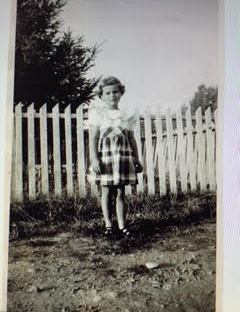
 Dear Little Lost